Professional Stone Mason in Winchester, MA – Engineered for Glacial Till & High Water Tables
Constructing custom bluestone terraces, precision stone retaining units, or structural brick features across Winchester Centre and Myopia Hill requires an explicit mechanical layout. Winchester’s local topography is defined by dense glacial till from the neighboring Middlesex Fells ridges and high-moisture silt lines surrounding the Aberjona River basin. Laying premium flagstone paths or heavy architectural entryway pillars along Main Street or Cambridge Street without executing deep excavations past the 48-inch regional frost line triggers immediate joint fractures and shifting stone runs during winter freeze-thaw shifts. At Castone Masonry, we eliminate frost-heave failures. Our teams clear out stubborn subterranean rock obstructions, build extra-deep compacted crushed stone bases, and hand-chisel every native stone edge to ensure your estate hardscaping remains level permanently.
Request an On-Site Estimate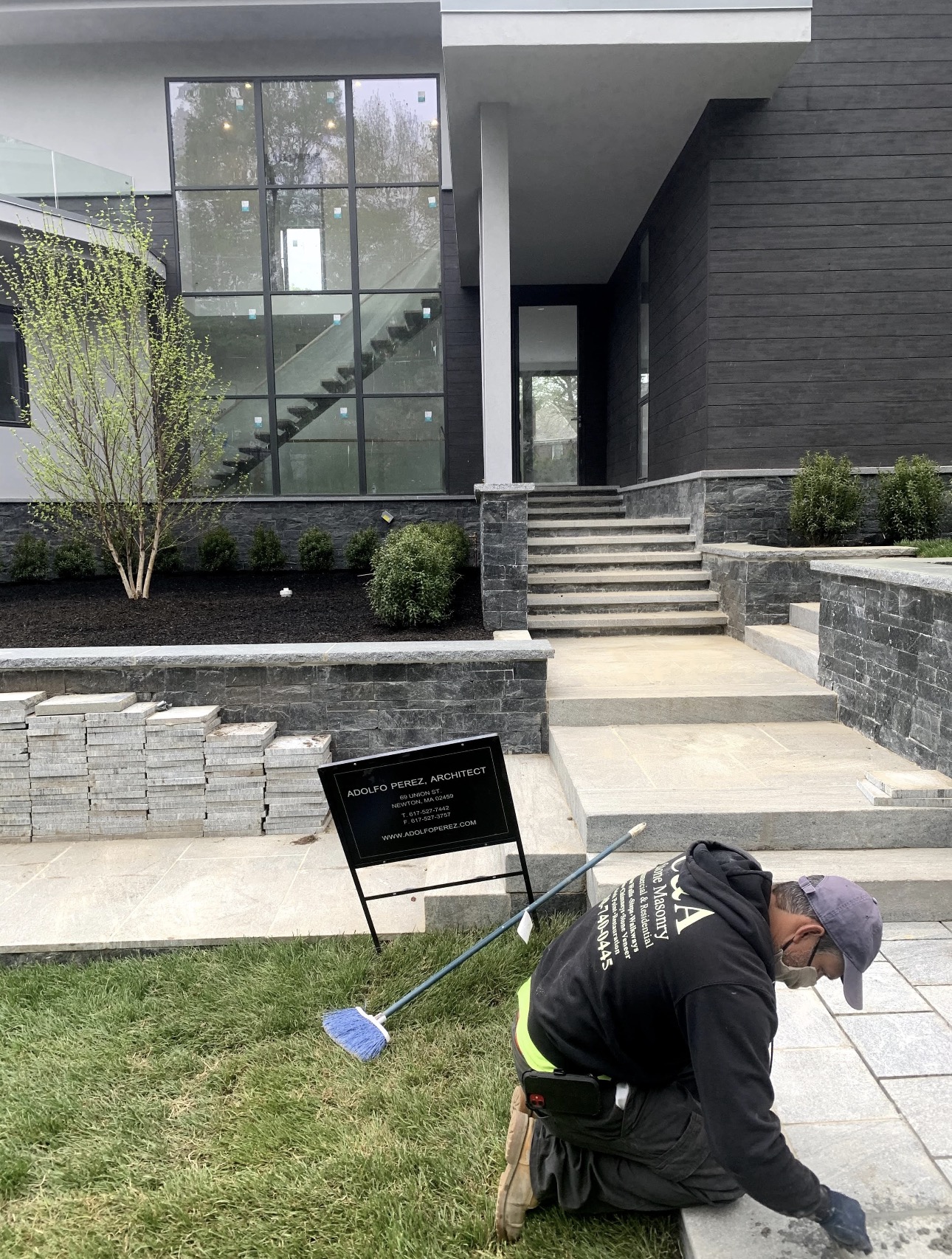
Engineering Standards for Winchester Valley & Ridge Estates
Glacial Till Excavation
Winchester's hillside subsoil is packed with dense clay matrices and heavy buried boulders from glacial deposits. We utilize specialized heavy machinery to clear out these underground obstructions beneath all hardscape footprints, establishing a stable, uniform gravel base grid.
Aberjona Basin Hydro-Grading
Properties positioned close to the Aberjona River or Wedge Pond encounter a flutuating high water table that saturates foundation soils. We micro-grade all stone flatworks by a strict fraction per foot and integrate buried geotextile drainage networks to clear water without shifting base aggregates.
48-Inch Frost Boundary Footings
Heavy vertical architectural features like standalone stone entry pillars and load-bearing step runs build massive downward pressure. We anchor these components using deep concrete structural footings dropped beneath the New England freeze line to stop leaning permanently.
Frequently Asked Questions Regarding Winchester Masonry
Why do stone retaining walls and patios in Winchester sag or shift after heavy winter cycles?
Sagging and shifting are direct products of Winchester's water-retaining clay subsoil and high water tables. When the ground holds water near the surface during a hard freeze, it expands into massive ice lenses that push stone structures upward and outward. We counter this cycle by replacing native clay with a deep, machine-compacted open-graded crushed rock foundation, letting water pass straight through safely instead of freezing under your stones.
How do you manage shallow bedrock or ledge rock during estate excavation in Winchester?
strike solid ledge rock frequently near the Middlesex Fells ridges. Instead of halting excavation or attempting unsafe grading, we expose the bedrock face, drill mechanical anchoring paths, set heavy steel rebar pins directly into the ledge, and tie the structural stone features or concrete slabs directly to the earth's bedrock core for unyielding stability.
What parameters require Winchester Conservation Commission approval for hardscaping?
Because Winchester features critical water systems like the Aberjona River, Wedge Pond, and Mystic Lakes, any masonry construction, grading, or excavation planned within a 100-foot buffer zone of a wetland resource requires a formal filing with the Winchester Conservation Commission. We focus our waterfront designs on dry-laid, highly permeable natural stone structures that allow natural water filtration, ensuring smooth municipal approvals.
Stone Mason Near Me in Winchester
Our commercial service flatbeds and site vehicles operate daily across Main Street, Cambridge Street, and throughout the estate avenues of Winchester, delivering raw New England granite, premium bluestone, and expert stone masons directly to your project plot. We handle all logistics and structural steps to stay fully aligned with town historic district codes, tree protection guidelines, and Middlesex County building rules.