Professional Stone Mason in Lexington, MA – Engineered for Glacial Till & Historic Codes
Constructing architectural bluestone terraces, historic fieldstone walls, or structural brick features near the Lexington Battle Green requires an aggressive subsurface defense. Lexington’s inland topography is dominated by compact glacial till, dense clay deposits, and hidden subterranean granite matacões. Placing premium bluestone walkways or high-load entry pillars along Route 2A or Waltham Street without deep excavation down past the 48-inch New England frost line leads to immediate joint fractures and shifting stone courses. At Castone Masonry, we engineer for geological performance. Our crews eliminate frost-heave risks, clear underground obstructions, and hand-chisel local New England stones to guarantee your luxury estate hardscaping remains flat and structurally sound permanently.
Request an On-Site Estimate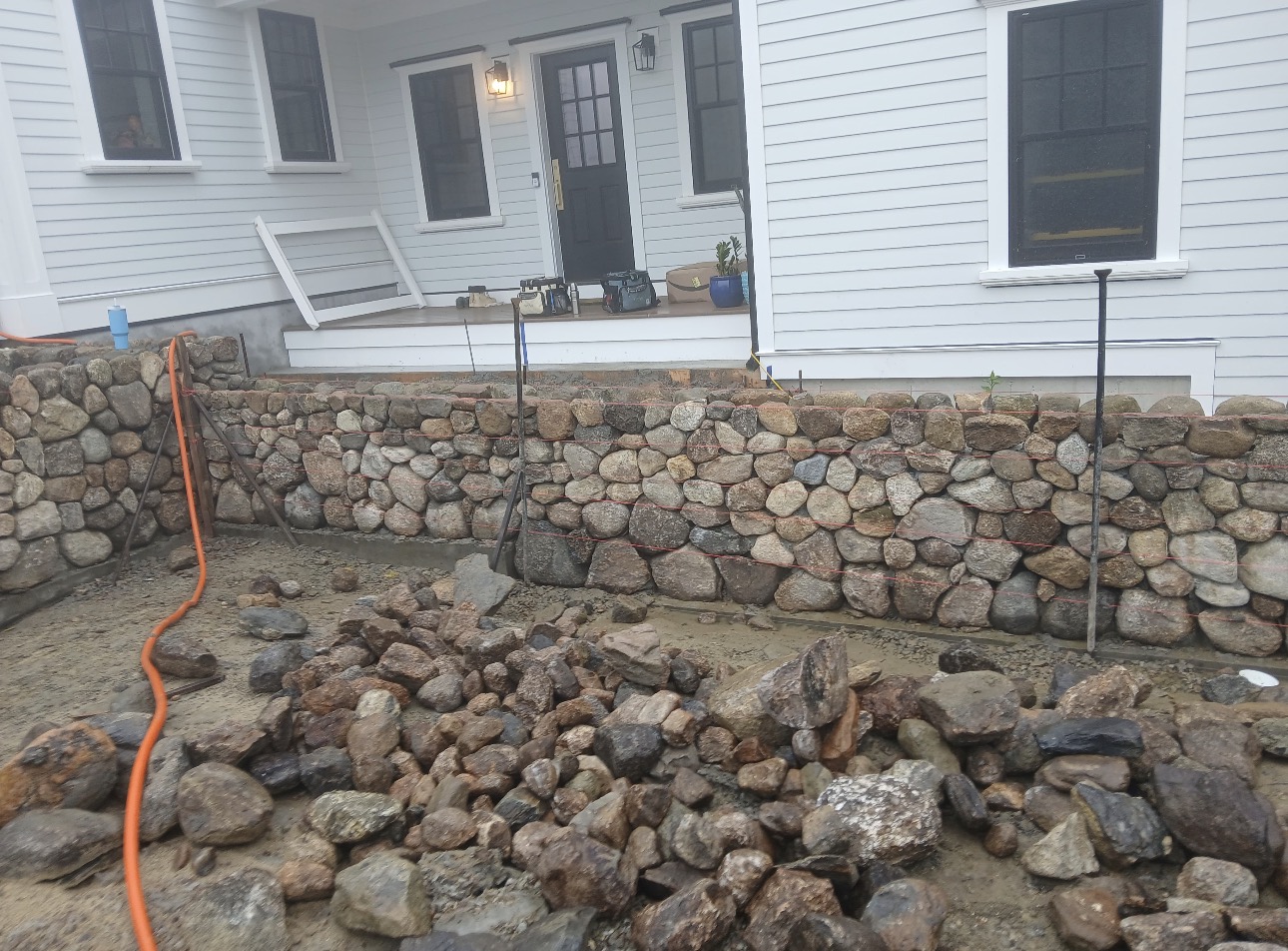
Engineering Standards for Lexington Landscapes & Historic Districts
Glacial Till Stabilizing
Lexington’s compact stone-heavy till and clay hold moisture tightly, creating extreme upward force during deep winter freezes. We dig out native soil profiles beneath all flatwork installations, substituting them with open-graded crushed rock fields that prevent frost water retention.
Historic Lime Pointing
Preserving early colonial brick chimneys and natural stone barriers along historic pathways demands specific material matching. We avoid modern, brittle Portland cements on vintage masonry, applying low-compressive lime-and-sand mortar blends that breathe and flex naturally.
Sub-Base Drainage Curtains
Waterlogged clay hill surfaces exert severe downward and outward hydraulic pressure behind solid mortared structures. We install wide aggregate backfill curtains behind all vertical walls and embed perforated weep outlets to safely drain water before ice can snap the seams.
Frequently Asked Questions Regarding Lexington Masonry
Why do historic stone walls and chimneys in Lexington crack or bow after winter?
Cracking and bowing occur when modern, rigid concrete patches are smeared over historic, flexible fieldstone or soft clay brick structures. Because modern cement does not allow moisture to escape, water gets trapped inside the wall. When winter freezing occurs, the expanding ice forces the native stones or brick faces out of their original alignment. Re-pointing with soft hydraulic lime mortars solves this cyclic damage.
How deep do you excavate for a custom granite or bluestone stair run in Lexington?
Due to Lexington’s dense, water-retaining clay subsoil, structural stairs and load-bearing pillars must sit on an absolute foundation. We excavate down below the 48-inch frost line to clear out organic root zones and dense till, building a machine-vibrated structural crushed stone bed to prevent severe winter frost heaving from throwing the steps out of square.
What parameters require Lexington Historic Districts Commission review for stonework?
Any masonry, hardscaping, chimney reconstruction, or wall installation visible from a public way within Lexington’s designated historic districts requires formal permit review and a Certificate of Appropriateness. We design our premium stonework to strictly honor original joint styles, local New England stone color ranges, and historical textures to streamline municipal board approvals cleanly.
Stone Mason Near Me in Lexington
Our commercial service flatbeds and site vehicles operate daily across Route 2A, Waltham Street, and throughout the historic residential neighborhoods of Lexington, delivering raw New England granite, natural fieldstones, and expert stonemasons directly to your yard. We manage all site steps to stay strictly aligned with Lexington historic district guidelines, tree preservation bylaws, and state building codes.