Professional Stone Mason in Wellesley, MA – Engineered for Glacial Clay & Hardpan
Constructing architectural bluestone terraces, custom estate driveways, or substantial fieldstone retaining boundaries near Lake Waban requires a strict structural approach. Wellesley’s native subsoil consists heavily of dense glacial clay and compacted hardpan layers that hold surface water with aggressive intensity. Placing heavy natural stone stairs or expansive paver runs along Route 9 or Washington Street without deep, machine-vibrated aggregate foundations triggers immediate lateral shifting and joint shearing during harsh New England winter freezes. At Castone Masonry, we eliminate clay heaving. Our crews clear out stubborn soil layers, construct extra-deep gravel drainage fields, and hand-chisel every New England stone block to ensure your premium hardscape layout remains perfectly plumb permanently.
Request an On-Site Estimate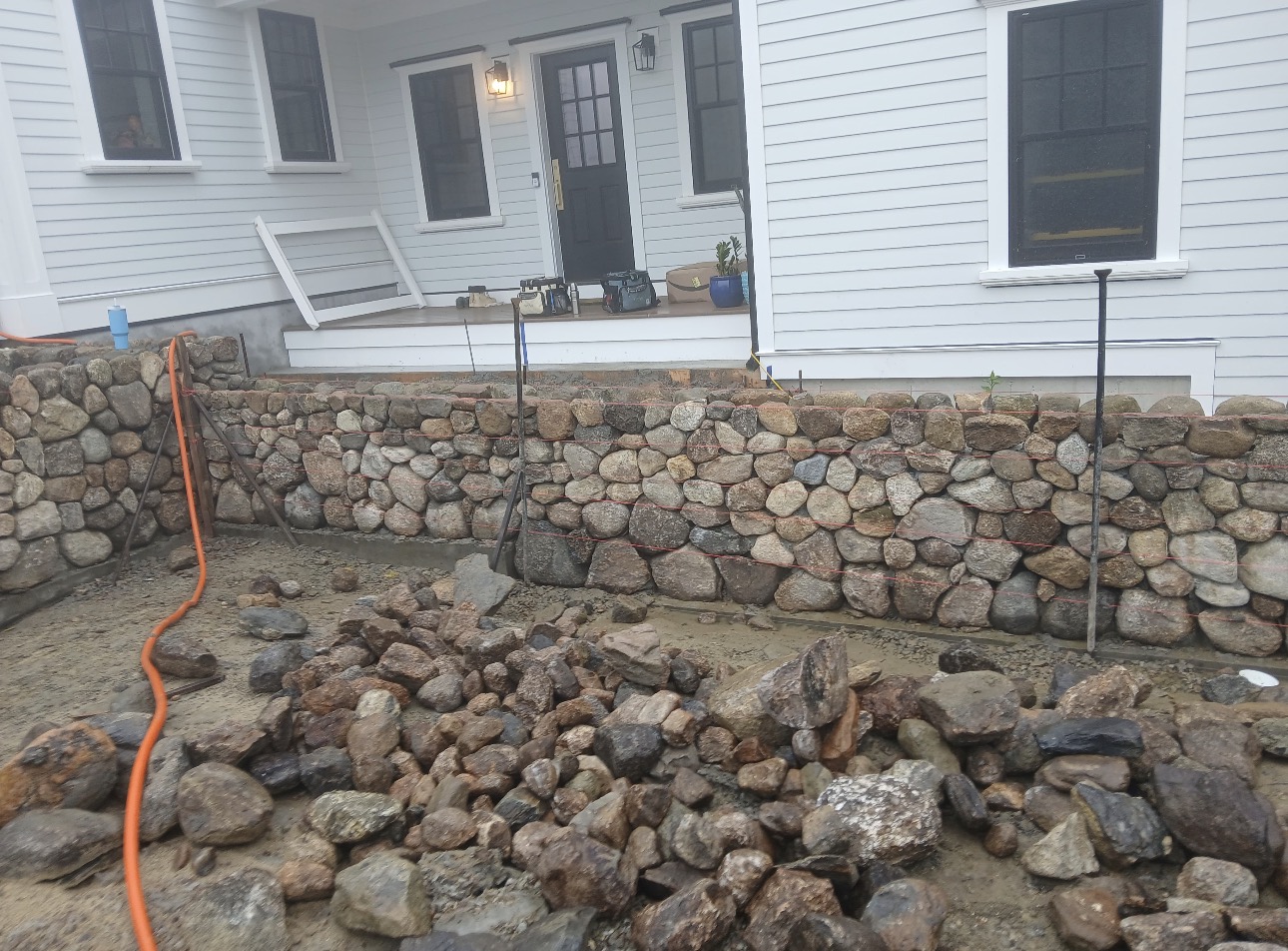
Engineering Standards for Wellesley Luxury Landscapes
Clay Hardpan Digouts
Wellesley’s tight clay profiles act like a subterranean sponge, creating immense upward force during a deep freeze. We dig out native clay runs beneath all flatwork areas, substituting the layout with sharp, angular crushed granite aggregate that prevents water containment.
48-Inch Frost Line Bracing
Heavy vertical architectural masonry features like stone entry pillars and structural gates must stand completely rigid. We place deep concrete footings that reach beneath the New England frost line, anchoring the structural weight cleanly to stop leaning or alignment drops.
Hydrostatic Curtain Drains
Water-saturated soils put extreme physical pressure behind solid mortared stone walls. We construct wide, washed gravel backfill curtains behind every vertical masonry build and route perforated weep lines to vent expanding water before ice bonds can fracture joints.
Frequently Asked Questions Regarding Wellesley Masonry
Why do custom bluestone and flagstone patios in Wellesley lift or crack after severe winters?
Patio lifting and joint cracking are the direct results of Wellesley's dense glacial clay. Because clay holds water directly against the underside of flat paving stones, it expands aggressively when temperatures drop below freezing, forcing the stones upward. We avoid this by building a deep foundation bed of open-graded crushed stone aggregates wrap-framed in geotextile separation fabrics, letting water pass downward instead of trapping and freezing.
How do you build stone walls and patios near historic oak trees on Wellesley estates safely?
Wellesley enforces strict tree protection bylaws to protect its mature tree canopies. Excavating with heavy machinery near large root systems can permanently shock or kill the tree. To safely build premium stone features, we utilize air-spade technology to clear out dirt without snapping critical roots. We map out main root paths and bridge over them using dry-laid structural stone piers or structural gravel matrices, keeping your trees safe and the stone layout level.
What parameters require Wellesley Conservation Commission approval for hardscaping?
Properties close to local watersheds, Fuller Brook, or the Charles River corridor fall under strict municipal environmental oversight. Any hardscaping, excavation, or stone masonry construction planned within the 100-foot buffer zone of a wetland or waterway requires a formal filing. We focus our waterfront estate designs on highly permeable, dry-laid stone structures that handle rainwater naturally, streamlining municipal permit track reviews.
Stone Mason Near Me in Wellesley
Our structural field units operate daily along Route 9, Washington Street, and throughout the estate avenues of Wellesley, bringing precision material compactors, custom diamond-edged stone splitters, and master stone masons directly to your project plot. We handle all logistics and filings to fully honor town historic guidelines, landscape neighborhood preservation codes, and tree buffer rules.