Professional Stone Mason in Newton, MA – Engineered for Historic Preservation & Glacial Clay
Constructing custom bluestone terraces, restoring historic estate chimneys, or building substantial fieldstone walls across Newton Centre and Chestnut Hill requires an exact mechanical approach. Newton’s native geology combines dense, water-retaining glacial clay matrices with hidden outcrops of hard puddingstone bedrock. Placing premium natural stone walkways or high-load entrance pillars along Route 9 or Commonwealth Avenue without deep excavation past the 48-inch New England frost line triggers immediate joint fractures and shifting stone courses. At Castone Masonry, we eliminate frost-heave failures. Our teams clear out underground stone obstructions, engineer high-density aggregate drainage fields, and hand-chisel architectural stone features to protect your luxury estate investment permanently.
Request an On-Site Estimate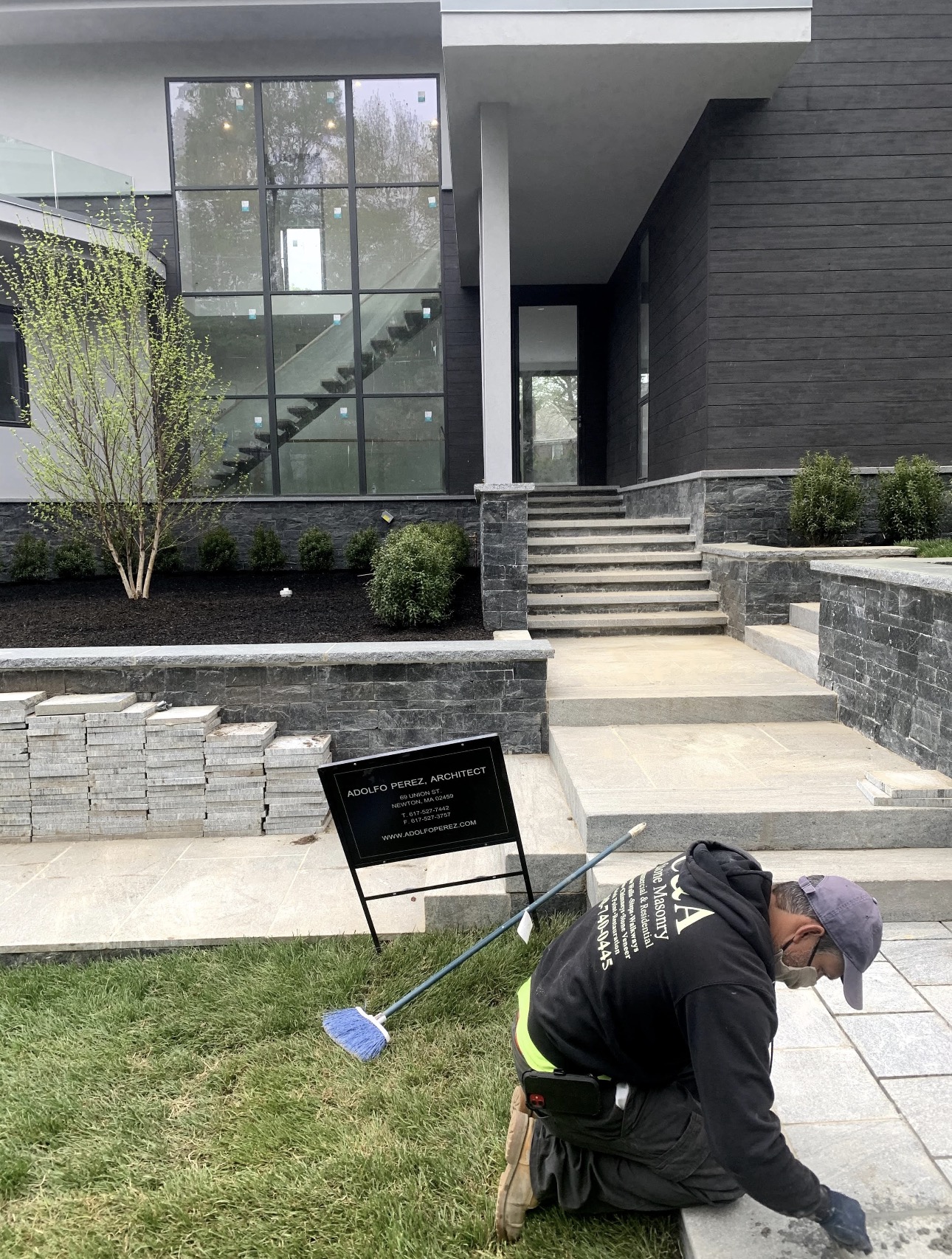
Engineering Standards for Newton Estates & Historic Villages
Clay Frost Digouts
Newton’s dense clay subsoil acts like an underground sponge, expanding with massive physical pressure when frozen. We excavate deep sub-base channels, substituting native clay with open-graded, angular crushed granite aggregate beds that cannot retain water beneath flatwork.
Historic Preservation Mortars
Working within Newton’s historic architectural preservation zones requires period-correct binders. We reject modern, brittle Portland cement on vintage brickwork and fieldstones, mixing custom, low-compressive lime mortars that flex naturally and prevent historic brick faces from flaking.
Puddingstone Foundation Links
Subterranean puddingstone and ledge formations are common across rolling Newton lots. When excavation hits solid bedrock, we use specialized drills to set heavy steel structural pins directly into the ledge, anchoring your stone retaining walls and pillars to the earth's core.
Frequently Asked Questions Regarding Newton Masonry
Why do historic brick chimneys and stone walls in Newton's older villages bow or crack?
Bowing and joint failure occur when modern, non-permeable cement is used to patch old, flexible masonry structures. Modern cement seals the system, trapping moisture inside the vintage soft clay bricks or local fieldstones. When winter temperatures freeze, the trapped water expands into ice lenses, pushing the masonry out of its original alignment. Grinding out the joints and repointing with breathable lime mortars stops this cycle.
How do you handle deep excavation for stone patios without damaging mature trees or breaking local codes?
Newton enforces very strict tree preservation ordinances. Excavating near old-growth oaks or maples with standard machinery cuts vital root lines, violating town rules and killing the tree. We use advanced air-spade tools to clear soil without snapping roots. We map the critical root paths and bridge over them using dry-laid stone piers or highly porous structural aggregate bases, keeping your patio flat and your trees fully healthy.
What are the permitting requirements for building new stone walls or hardscapes in Newton?
Any masonry wall exceeding 4 feet in height requires structural engineering drawings and a building permit from the city. Furthermore, if your property sits within a designated historic district or inside a 100-foot wetland buffer zone near the Charles River, plans must be reviewed and approved by the Newton Historical Commission or the Conservation Commission. Our team manages all engineering plans and municipal filings to ensure smooth approvals.
Stone Mason Near Me in Newton
Our commercial service flatbeds and site vehicles operate daily across Route 9, Commonwealth Avenue, and throughout all thirteen villages of Newton, delivering raw New England granite, natural bluestone, and expert stone masons straight to your property line. We manage all site logistics to stay fully compliant with Newton historic district guidelines, tree preservation bylaws, and Middlesex County building rules.