Professional Stone Mason in Harwich, MA – Engineered for Peat Bogs and Shore Sands
Setting structural fieldstone walls, custom bluestone walkways, or brick patios near Red River Beach requires an advanced subsurface assembly. Harwich’s unique regional topography transitions sharply from fluid coastal sand along the Nantucket Sound shoreline to spongy, high-moisture peat loam surrounding our inland cranberry bogs. Laying heavy masonry structures across Lower County Road or near Harwich Port without broad, compacted gravel aggregate beds triggers fast uneven settling and broken stone seams during harsh winter lockups. At Castone Masonry, we anchor hardscaping profiles. Our crews clear out soft topsoil runs, mechanical-pack wide stone footing frameworks, and split native New England fieldstones along Route 28 to withstand heavy moisture and shifting sub-grades permanently.
Request an On-Site Estimate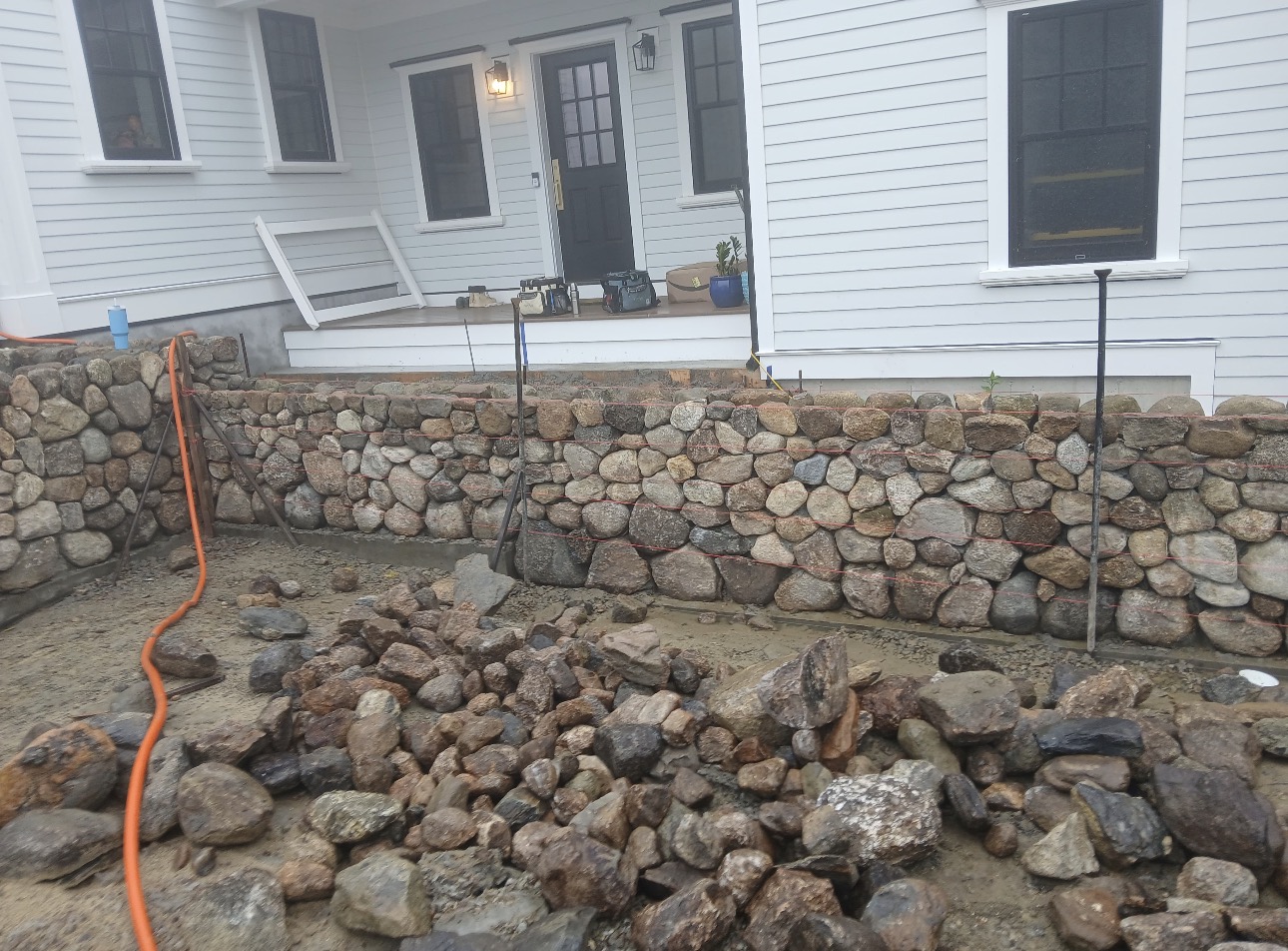
Engineering Standards for Harwich Lowlands & Shorelines
Peat Loam Excavation
Inland Harwich properties near active or historic bogs feature highly elastic organic soil. We execute wider trench excavations to bypass the sponge layer entirely, structural-packing non-porous gravel grids to supply a stone wall or step run with an unyielding foundation footprint.
Acidic Water Protection
Groundwater running through bog-heavy zones carries a high acidic profile that slowly eats away at low-grade masonry binders. We utilize specific high-density mortar compounds with structural chemical blockades, preventing acid erosion from deteriorating core chimney joints or brick work.
Sub-Base Weep Networks
High water tables near Harwich Port can trap large liquid volumes directly beneath flat paving stones. We integrate multi-layered stone bedding structures combined with buried drain tiles, letting heavy subsurface water flow out naturally without lifting the patio stones during thaws.
Frequently Asked Questions Regarding Harwich Masonry
Why do backyard stone patios near Harwich ponds sink or basin over time?
Sinking occurs because the soil near Harwich’s inland lakes and bogs contains heavy organic matter that holds water and compacts unevenly under weight. If a masonry contractor does not remove this soft layer and substitute it with dense, machine-vibrated crushed rock, the weight of the bluestone or pavers will push the center downward.
How does iron-heavy well water in Harwich affect light bluestone and granite surfaces?
Harwich’s groundwater often has high iron levels. Frequent contact from yard sprinkler systems causes a chemical reaction that leaves orange rust stains on natural stones like Pennsylvania bluestone or granite steps. We recommend deep-set drainage lines to guide overspray away, or applying specific breathable sealants to prevent rock absorption.
What are the Harwich Conservation Commission guidelines for hardscaping near waterways?
Any earth removal, stone wall building, or patio footprint adjustment within 100 feet of Harwich's coastal banks, cranberry bogs, or inland ponds requires active conservation filing. We specialize in dry-laid stone setups that filter stormwater naturally back into the local water table, meeting municipal water protection codes cleanly.
Stone Mason Near Me in Harwich
Our material dispatch trucks travel daily down Route 28 and throughout Lower County Road, transporting custom-cut granites, local New England fieldstones, and base aggregate grids straight to residential properties. We manage all site steps to stay strictly aligned with Harwich conservation directives and state building frameworks.